

In recent years, artificial intelligence has begun transforming the workplace at breakneck speed. This transformation is a double-edged sword: on one side, companies are embracing AI to boost productivity, but on the other side, workers are facing mass layoffs as their roles are automated. In this blog, we explore how AI is leading to widespread job displacement, why the situation might get worse before it improves, and why now is the time for workers to seek alternative careers or acquire new skills.
The Rise of AI-Powered Layoffs
The adoption of AI in business is accelerating rapidly – and with it comes a surge in job cuts. Major corporations across industries have started trimming their workforce specifically to make room for AI-driven efficiency. For example, IBM announced about 8,000 layoffs in early 2024 as part of an AI-focused restructuring. Likewise, Cisco revealed plans to lay off 5,500 employees (about 7% of its staff) despite healthy profits, explicitly citing a shift toward AI investments as the reason. These companies are not alone; tech giants like Microsoft and Intuit have similarly used AI as justification for major cuts to their workforce.
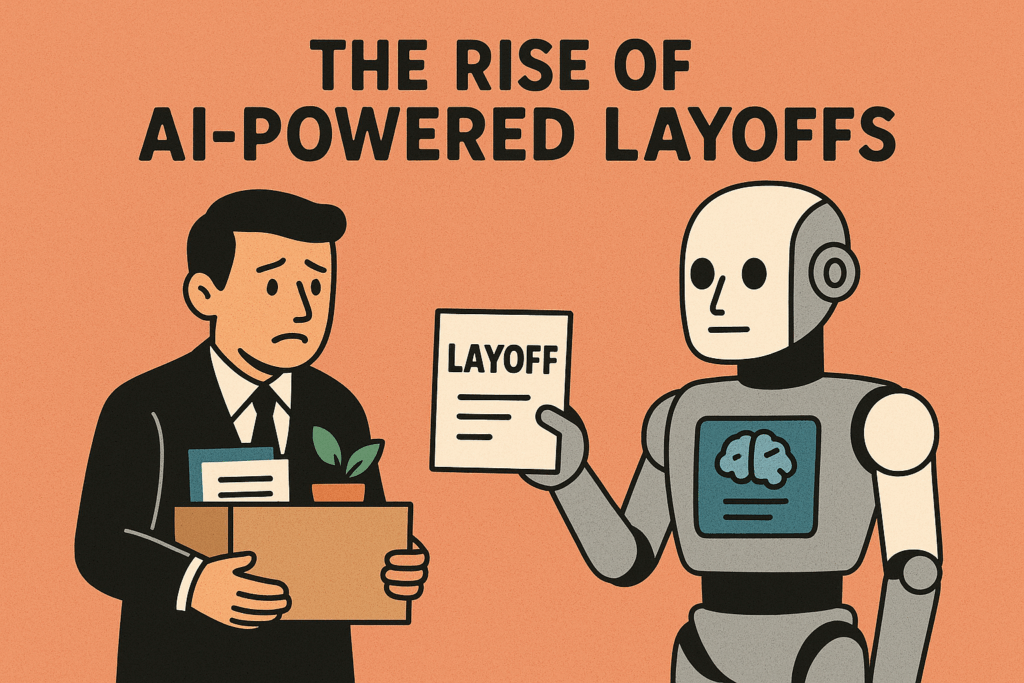
This trend gained momentum through 2023 and 2024. In 2023 alone, over 212,000 tech workers were laid off – more than at the height of the pandemic. Industry analysts note that this wave of layoffs was fueled not only by economic uncertainty but also by the tech industry’s intense focus on AI adoption. For example, Microsoft announced plans to cut 10,000 jobs as a cost-saving measure while simultaneously making a multibillion-dollar investment in OpenAI (the company behind ChatGPT), and Meta’s CEO Mark Zuckerberg likewise announced 10,000 layoffs even as the company doubled down on AI initiatives. The message from these companies is clear: they are willing to reduce human headcount in favor of AI-driven productivity gains.
Not even traditionally “safe” white-collar jobs are immune. A Harvard Business Review analysis suggests that although AI might not cause permanent mass unemployment at a macro scale, it is likely to trigger significant short-term job losses, particularly in white-collar professions once considered secure. From media and marketing to customer service and even software development, roles that were thought to require an irreplaceable human touch are now being augmented or outright replaced by AI systems. In one striking example, the web portal MSN began using AI to generate news content, resulting in the layoff of dozens of human journalists. More recently, an e-commerce company in India replaced 90% of its customer support staff with an AI chatbot, and a Chinese marketing agency eliminated its human content writers in favor of generative AI tools. These cases illustrate that automation is reaching deep into knowledge work and service sectors, not just manufacturing or rote assembly line jobs.
“Worse Before Better”: Short-Term Pain, Long-Term Adjustments
The disruptive impact of AI on jobs may well get more severe in the immediate future. Experts often describe this phase as “pain before progress.” As generative AI and automation technologies mature, they can handle more complex tasks, meaning a wider range of jobs are at risk of redundancy in the short run. A leading prediction by Goldman Sachs is that AI could eliminate up to 25% of current work tasks in the U.S. and Europe, potentially putting tens of millions of jobs at risk. Similarly, the International Monetary Fund noted that about 60% of jobs in advanced economies could be significantly impacted by AI; roughly half of those roles might see key tasks taken over by machines (with lower demand for human labor and some jobs disappearing entirely). These projections underscore an unsettling possibility: we may witness a sharp spike in job displacement and unemployment as AI adoption peaks, before the economy eventually readjusts.
However, this is only one side of the coin. Historically, technological revolutions eventually lead to new industries and roles, even if many old ones vanish. The current AI revolution appears to be following a similar pattern. While short-term prospects for many workers are uncertain, there is cautious optimism among economists that AI will also create new opportunities in the longer term. In fact, AI is expected to generate jobs as well as destroy them – just not simultaneously. Emad Mostaque, a prominent AI industry leader, points out that an estimated 300 million jobs could be at risk from AI automation, yet about 97 million new AI-related roles might emerge by 2025. In other words, the labor market of the future will look very different, but not necessarily smaller. Those new jobs will likely be in areas where humans collaborate with, manage, or develop AI – roles that barely existed on a large scale a decade ago.
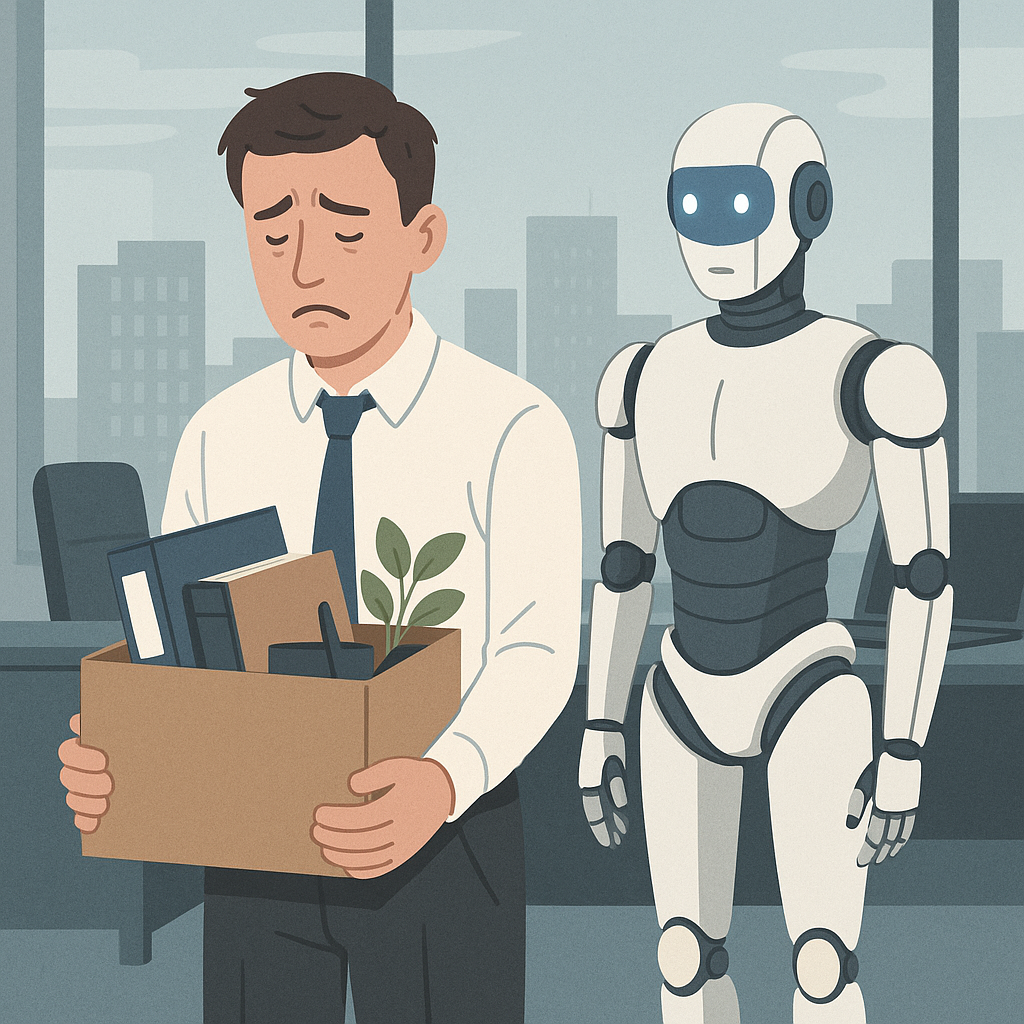
The transition period, though, is where the pain is felt. In the immediate future, many workers will need to navigate layoffs, redeployments, or slower wage growth as AI reshapes workflows. As one industry CEO bluntly stated, we’re on “the precipice of an unprecedented skills crisis” – businesses are rushing to implement AI and reduce headcount, but in doing so they are also creating a widening gap for talent with the right skills to fill emerging roles. In other words, things might get worse before they get better: job losses and disruptions could hit hard until the workforce’s skills catch up with the new demands of an AI-driven economy.
Who Is Most at Risk?
AI’s impact on employment is not evenly distributed; some sectors and roles face greater risk than others. Early evidence suggests that routine-heavy and data-intensive jobs are prime targets for AI replacement. Clerical work, basic content creation, customer support, and certain analytical or administrative roles can often be automated by algorithms. For instance, call center operators and help-desk agents are increasingly being supplanted by AI chatbots that can handle inquiries 24/7. Even software engineers in Silicon Valley, who once seemed untouchable, now face the risk of being outpaced by peers who leverage AI coding assistants – or being restructured out of their jobs entirely if they only perform routine programming tasks. In finance, journalism, and law, AI is already drafting basic news reports, writing marketing copy, scanning legal documents, and analyzing financial data far faster (and cheaper) than humans, which puts a wide range of white-collar roles in the crosshairs.
For example, the World Economic Forum’s latest Future of Jobs report found that postal clerks, secretaries, and similar clerical roles are among the fastest-declining job categories – a sign that AI and automation are rapidly reducing demand for those positions. Even roles like graphic designers and legal secretaries, which involve cognitive skills, appeared for the first time on the list of at-risk occupations, illustrating generative AI’s growing capacity to perform knowledge work. On the other hand, roles that require creativity, complex strategic thinking, or a human touch are relatively safer for now. Jobs least in danger from AI automation include healthcare providers (doctors, nurses, therapists), educators (especially in early childhood and special education), skilled tradespeople (electricians, plumbers, carpenters), as well as leadership roles in people-focused domains like HR. These occupations involve physical presence, hands-on problem solving, emotional intelligence, and social interaction – qualities that current AI and robots struggle to replicate. Of course, AI will still become a powerful tool in these fields (for instance, assisting doctors with diagnostics or teachers with personalized learning plans), but it is unlikely to fully replace the human professionals any time soon.
In summary, workers whose day-to-day duties are highly repetitive, predictable, and rules-based are the ones who should be most concerned about rapid automation. By contrast, if your job centers on interpersonal relationships, creative innovation, or unpredictable real-world conditions, you have a stronger buffer against being replaced by a machine. Still, no position is entirely immune. The key for everyone is to stay aware of how their profession is evolving under the influence of AI – and be prepared to adapt if needed.
Adapting Through Upskilling and Reskilling
In the face of AI-driven upheaval, one clear strategy emerges: upskill or reskill to stay relevant. Upskilling means learning new competencies within your current field (often leveraging AI tools to do your job better), while reskilling means training for an entirely new job or career path. Both approaches are becoming essential for workers who want to thrive in the era of AI. The good news is that many business leaders today recognize the value of retraining employees rather than simply laying them off. In a recent survey of tech hiring managers, 69% said advances in AI will ultimately create new jobs, and more than 3 in 4 said that employees whose jobs are at risk due to AI could likely be retrained for other roles in the organization. In practice, we already see some companies taking this route. For example, Ikea did not just replace its call-center staff with an AI chatbot; it also offered to retrain those employees for new roles (such as interior design advisors), aligning human talent with tasks that AI cannot do. Forward-thinking organizations understand that letting experienced people go en masse means losing institutional knowledge. Instead, they are investing in internal training programs and encouraging their workforce to use AI as a tool for productivity, rather than viewing it as a threat.

In fact, the CEO of Shopify recently told employees that using AI is now a “fundamental expectation” of their jobs, even announcing that the company will not approve new hires for a role unless the team can prove that the task cannot be done by AI. This kind of top-down directive sends a strong signal: to keep your job (or to land a new one), you must learn to work with AI. So, what kinds of skills are in demand in an AI-enhanced workplace? On the technical side, there is a booming need for AI literacy – not just among software developers, but across job functions. Skills in data analysis, machine learning, prompt engineering (crafting effective inputs for AI systems), and AI system oversight are increasingly valuable. AI development and data science expertise rank among the most sought-after technical skills by employers, and ironically, these are also some of the skills most lacking in the current talent pool. Even a basic understanding of how AI algorithms function or how to interpret data trends can set job candidates apart.
Beyond the tech know-how, human skills are more important than ever. Abilities like adaptability, strategic thinking, creativity, leadership, and emotional intelligence – the qualities that machines can’t easily replicate – are at a premium. Many hiring managers say they are looking for traits such as problem-solving, communication, and resilience in the face of change. The ability to continually learn new tools and adapt to new workflows is itself now a core skill. In short, lifelong learning has become a survival strategy in the AI age.
For those in industries heavily affected by AI, reskilling into a completely new career might be the best path. The emerging AI-driven economy is already spawning job titles that barely existed a few years ago. We’re seeing growth in roles such as AI ethics officers, AI model trainers, “prompt engineers” (specialists in crafting queries to guide AI outputs), data curators, and AI maintenance specialists. Entirely new categories of work are expanding. A recent analysis projected millions of new jobs by 2030 in fields like AI governance & oversight (ensuring AI systems are fair and compliant), AI integration into business processes, cybersecurity focused on AI threats, and even “AI-enhanced” roles in education, healthcare, and green technology. Transitioning into these areas often requires additional education or certifications, but the opportunities are there for those who seek them. Governments and educational institutions are also starting to ramp up programs to facilitate this shift – for example, partnering with tech companies to offer AI training to workers and students
A Turning Point and a Call to Action
The current wave of AI-induced layoffs is a pivotal moment for the workforce. It’s a time of disruption, yes, but also a time of opportunity for those who are prepared to seize it. Just as the industrial revolution pushed societies to adapt through new skills and new social contracts, the AI revolution is challenging us to rethink our careers and development paths. Policymakers are waking up to the need for support structures – we see initiatives for digital skills training, discussions about universal basic income, and other ideas to soften the blow for displaced workers. Public-private partnerships (such as a recent collaboration between NVIDIA and the state of California to train a new generation of AI-skilled workers) are emerging to build a “digitally competent workforce” for the future. These efforts underscore a broader realization: the economy of tomorrow will be dramatically different, and people will need support to navigate the transition.
As an individual, waiting passively for the storm to blow over is not a wise option. History has shown that technological shifts tend to reward those who adapt and innovate, while punishing those who stay still. The good news is that humans are nothing if not adaptable. By focusing on continuous learning, we can turn the AI revolution from a threat into an opportunity. As futurist Peter Diamandis noted, reflecting on Mostaque’s insights, the key is to “stay curious, stay engaged”, because we each have a role in shaping how AI transforms society. Embracing a mindset of lifelong learning is no longer just a cliché – it’s genuinely the best strategy to ensure career resilience. This might mean taking an online course in data analytics, attending workshops on AI tools relevant to your field, or even exploring entirely different fields that are growing. It might feel daunting, but such proactive steps can be empowering.
In conclusion, AI is undeniably causing real turmoil in the job market today. Layoffs and displacement are happening at a scale that can feel alarming, and the turbulence may even intensify in the near term. Yet, it’s important to remember that this is not the end of the story. Just as past innovations eventually led to new jobs and greater productivity, AI too holds the potential to create a more efficient and even more human-centric working world – once we adapt to it. The road to that brighter future is bumpy, but there is a destination beyond the bumps. By acquiring new skills, staying flexible, and being open to career shifts, workers can navigate through the difficult times and come out ahead. As Emad Mostaque and others emphasize, the future is not predetermined – it’s ours to create. We have a small window of opportunity right now to shape how AI integrates into our economies. The challenge for each of us is to seize that opportunity, making sure that when the dust settles, we are not left behind by automation, but are instead ready to thrive alongside the new technologies.